
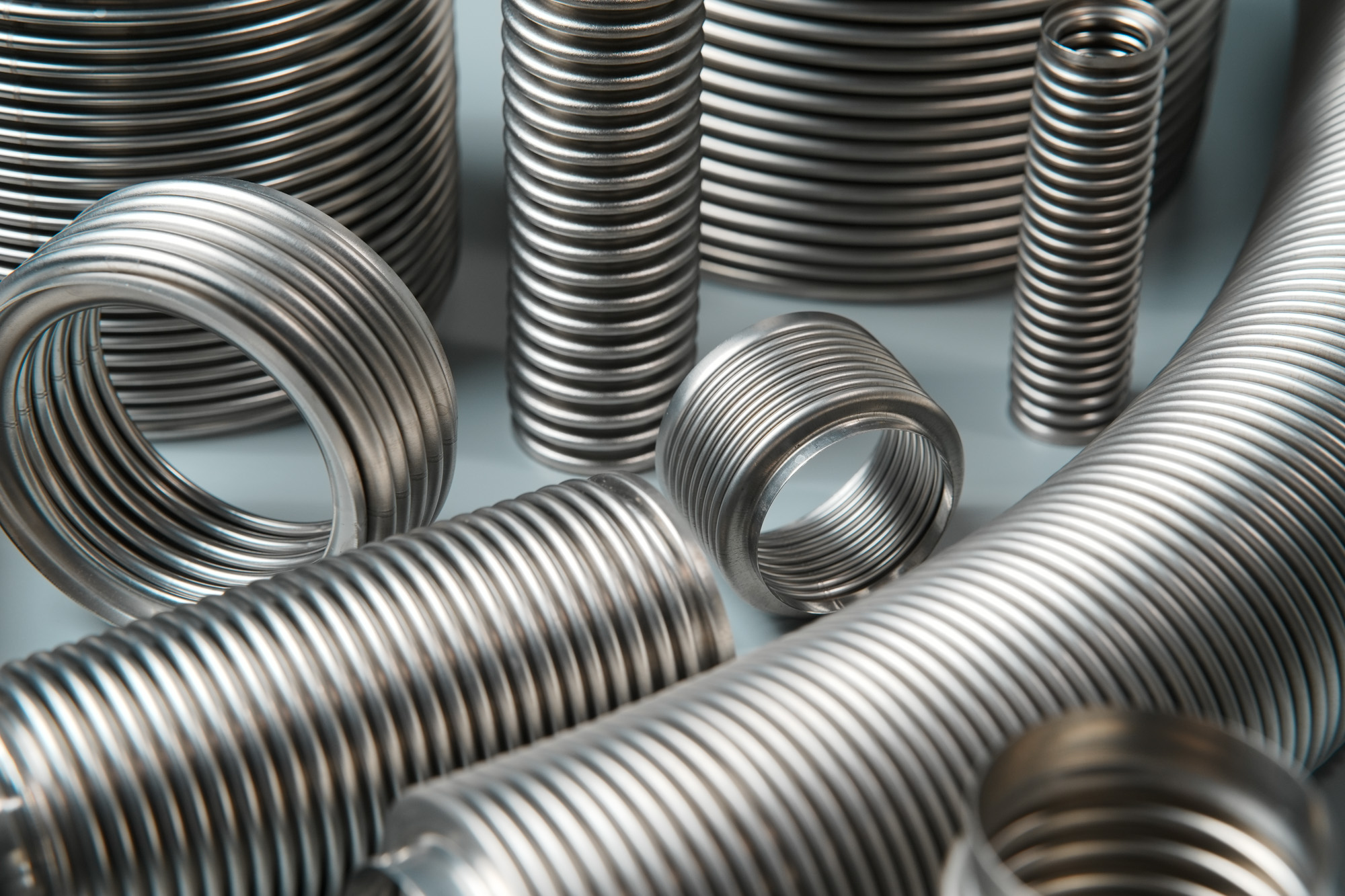
Bellows Basics: Functions and Applications
Small movements can create big challenges in mechanical systems. Temperature changes cause components to expand and contract. Vibration places stress on connections. Moving assemblies need seals that can flex without compromising performance.
Bellows help engineers manage these challenges. Their flexible, convoluted geometry allows them to accommodate movement while maintaining a barrier between environments.
What Are Bellows?
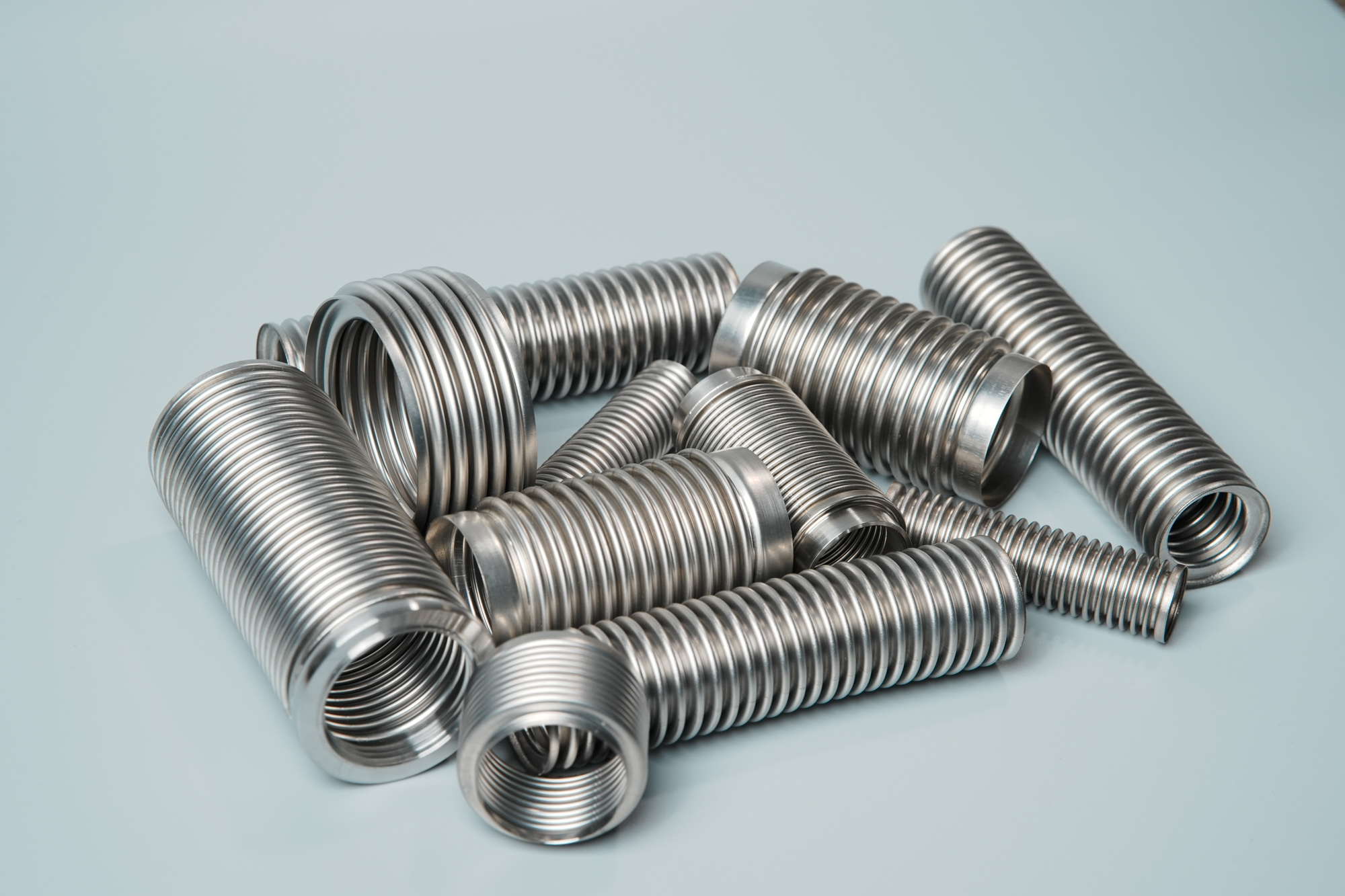
Bellows are flexible components designed to compress, extend, or bend within specified limits. They can be manufactured from metals and other materials, depending on the application.
Metal bellows are often selected for demanding environments involving temperature extremes, pressure differentials, vacuum conditions, or aggressive media. Common constructions include formed bellows and edge-welded bellows, each offering different advantages in flexibility, stroke, size, and manufacturability.
What Do Bellows Do?
- Accommodate movement
Bellows can absorb axial, lateral, or angular displacement when designed for those movements. This helps systems manage thermal expansion and controlled motion without placing excessive stress on adjacent components.
- Maintain a flexible seal
In suitable designs, bellows provide a sealed barrier while allowing movement. This makes them useful where a sliding seal could introduce leakage, friction, or contamination.
- Support Vacuum and Pressure Applications
Bellows allow controlled movement while maintaining a sealed barrier in vacuum and pressure systems. Their design must account for the pressure difference across the bellows.
- Help Isolate Vibration
Properly designed bellows can help reduce vibration transfer between connected components. Their effectiveness depends on operating conditions, mounting arrangements and the overall system design.
Where Are Bellows Used?
Bellows support applications across a wide range of industries, including:
- Aerospace & Defense: Aneroid valves and environmental control system (ECS) ducts.
- Energy: Fuel cell systems.
- Petrochemical: Gas lift valves and relief valves.
- Medical & Pharma: Equipment requiring controlled motion or fluid isolation.
- Power Generation: Fuel nozzles and exhaust ducts.
- Industrial Machinery & Equipment: Assemblies requiring flexible sealing and movement accommodation.
Choosing the Right Bellows
A successful design starts with more than size. Engineers must consider pressure differential, temperature, movement range, cycle life, media compatibility, spring rate, and installation constraints.
These requirements interact. A design that provides greater travel, for example, may introduce tradeoffs in stability, packaging, or fatigue performance.
Working with a manufacturing partner early helps identify those tradeoffs and develop a bellows solution suited to the application—not simply one that fits the available space.
Planning a bellows application? Explore Alloy Precision Technologies’ bellows and assemblies and start a conversation about your operating conditions, movement requirements, and performance goals.